
US Amateur Team North 2026 | London System Reflection


Last weekend I competed in this year’s US Amateur Team North event in Schaumburg, Illinois. I nearly composed an entire team of players from the Iowa City area but we were one player short and my last year teammate (from Illinois) was excited to put his upgraded skills (1733 -> 1943) to the test this year.
Overall, our team put forth an acceptable performance 3/5 but I felt I squandered quite a few of my games. Yes, I got to compete and speak with my Illinois students I only ever get to converse with online but my games were unpleasant due to my lack of control over the openings. I played against two players who were rated above 2400 and got good positions against them but it cost me time and I felt under under unnecessary pressure to make the optimal decision. My usual winning formula is maintaining slight edge and slowly pressing them on the board and clock until they crack under time pressure. That formula did was not effective against any of my opponents: 2440 (loss) / 2415 (loss) / 2290 (draw) / 2163 (win) / 2004 (draw).

This wasn’t my position but it was an interesting scheme I observed on our second board (Niko ~2040). It started with the pure london with the inclusion of 3.Nc3 that would force black to adopt a Grunfeld setup under optimal circumstances (d5 to prevent e4) but a stubborn King’s Indian player could find themselves staring at this position. I enjoyed watching this game and it provided me with more incentive to keep studying the London. The general game plan is trade off the bishops and checkmate the king down the h-file (e.g. h4-h5-hxg6). Niko was in the driver seat the entire game and having taught him the general objectives in most of these Londons, I find it kind of disappointing I haven’t tried applying this system to my competitions (probably my own stubbornness).
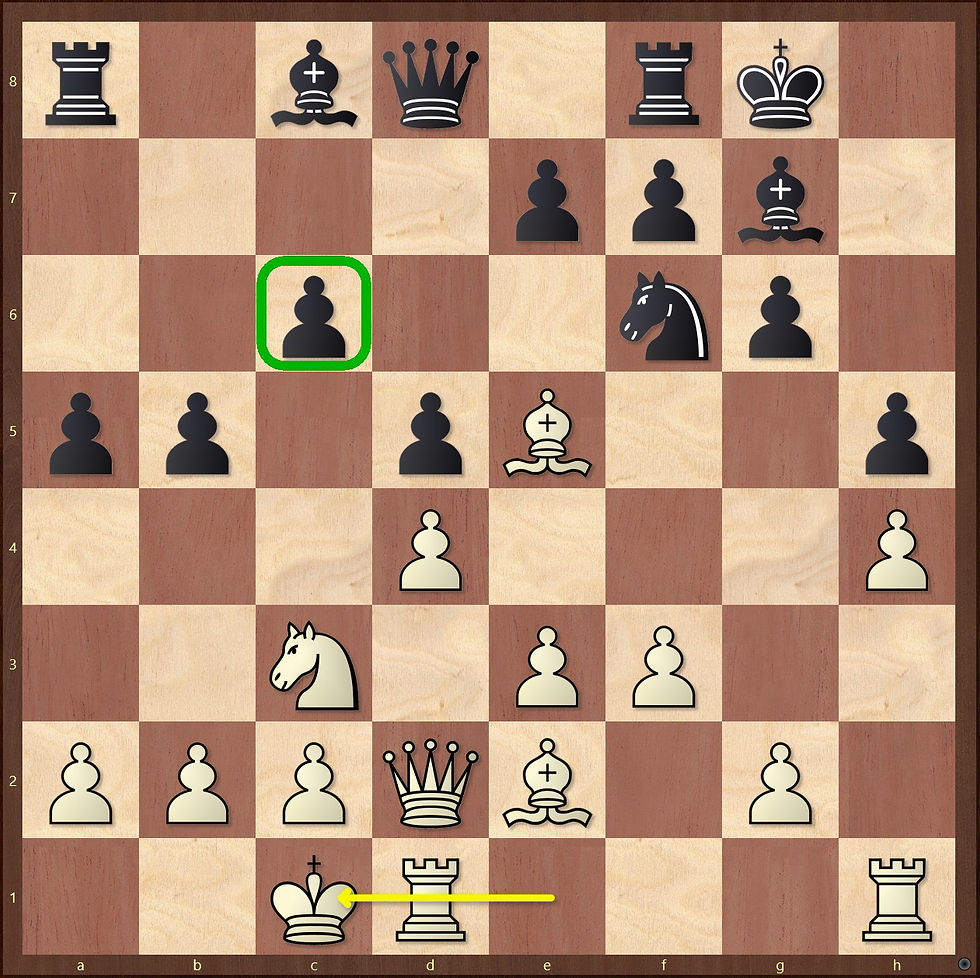
If you are curious, here is the other possible scheme white might employ if black chose to advance the d-pawn to d5. I highlighted the c-pawn since it is important. When black sends the avalanche on the queenside, you need to be productive on your own pawn storm but this attack is easily controlled since b4 could be met with Na4 and a4 can be met with a3 and Na2. The alternative is if black decided to advance the c-pawn to c5 and so far I saw white capturing the c-pawn and continuing with the queenside castle.
My next event will be in the middle of March (Cedar Rapids Leather Jackets) and then I will determine if I am motivated enough to journey down to Missouri to compete in the Mid America Open during Spring Break.


